Tuesday, April 23, 2013

Interruptive Advertising

I detest watching shows on television sometimes. Commercials are okay and allow for bathroom breaks or to grab a quick snack in between. But when there's only ten minutes left on the episode, and you're about to find out who was the murder –– bam –– commercial time!

Interruptive advertising, I feel, is mostly useless unless the pitch is captivating. Below are two of my favorite commercials that All state broadcasted and has cut in between one of my shows. No matter what I am watching, I do not mind these commercials because they are entertaining and make me laugh. Also, they are relatively short and use a humorous approach to get their point across.

Television and radio wise, I think interruptive advertising has greatly decreased. Now radio stations have hour long segments of plain music. But now, with the rise in technology and reliance on the Internet, there are now more commercials online than there was ever before. Now, if you want to watch your show online, or hear a song on Youtube, you must first watch an ad you can not skip. Sometimes the only way to avoid those ads are by paying a fee.

Advertising overall is helpful and useful for a company. The problem is when the content s irrelevant or boring. If the ad has something you would not expect –– like a grown man acting like a baby or woman  in labor –– it can capture your audience right off the bat. Other elements that contribute to the success of an ad would be the music, originality, recognizable people and an interesting story.


Saturday, April 20, 2013

Ethics Symposium


The fifth annual Spuler Ethics Symposium speakers Ivonne Montes de Oca, John DeLa Cruz, Timothy Hendrick and Michael Llewellyn- Williams gave their opinions and expertise on advertising ethics on April 16.
The panel opened the discussion by each individual making an opening statement on where they stand with advertising ethics.
“Ethics and advertising is not a black and white issue, its about varied shades of grey,” said John DeLa Cruz, assistant professor of advertising at SJSU.
Many speakers agreed with the general idea that there are many layers of ethics in advertising. 
“My view an ad cant be unethical. An ad is a tool,” said Dr. Michael Llewellyn-Williams, founder and principal of BrandMechanics Inc. “I think maybe the clients behind that ad may have shown unethical things.”
I found this panel discussion very interesting as each speaker had a different background in advertising. For the major of the questions, they agreed with each other in what they considered unethical or appropriate but lacking professional taste. 
Having example videos of advertising that was taking down and allowing the panel to address some questions was educational. One point made was perhaps sex no longer really sells in the industry, and sometimes implies desperate for attention of the product. Another point made with the commercial of Jack in the box was –– although poor in taste ––some ads are allowed because they are directed towards a certain audience. 
Although I would normally attend these type of events, having heard this panel intrigued me enough to push me to possible attend future discussions. 

Here are two sections of the discussion. The first is a video of an example commercial that Jack in the Box broadcasted. The second video is the panel's response


Bug Vacuum: The perfect Housewarming gift!

The product our group decided to make an advertisement for a housewarming gift was the bug vacuum.

We developed two separate scenarios for our radio and television ads.

For our radio, we decided to have a scene of Mitch and Tiffany talking about throwing a party. Then, Tiffany decides to use the bathroom when she sees a spider. We then proceed to play sounds of shoes banging, screams, thumping, newspapers hitting the wall and at the end advertise the product.
For our television ad, we have also a party scene where the girls decide t o go into the kitchen to see the cake and there is a man in a spider suit. The only way to get rid of the spider is through the bug vacuum.

These pictures are of our radio script.
This is a picture of our television storyboard. 

Friday, April 19, 2013

Creative Billboard Ads

As time goes on the portrayal of advertising has changed. Now, you can occasionally see a billboard that goes beyond normal creative means.

I liked this billboard because I thought it was a unique way to advertise IKEA furniture. I liked how they used their own furniture to form the "joy" and used specific colors to signify the holidays. Not only is it a pop up ad, but it is a refreshing and modern way to sell furniture. 

This billboard portrays perfectly how an iPod can be filled with a mixture of music that just explodes in your ears when you want it to. I like how it has multiple layers to the ad –– from the black background with colorful pop up albums, to the variety of titles it shows. I also thought it was interesting how it builds up the amount of music. 

This billboard uses creative ways to portray the pain a headache can cause. It is interesting how Tylenol used to billboards next to each other –– one with the picture of than man holding his head with the wrecking ball on his forehead, and the other with the phrase "TYLENOL, Get back to normal." It is normally hard to convey a feeling through one still, but demonstrating how having a headache is similar to a wrecking ball in your head was a creative way to portray it.

I thought this ad was very humorous and used its surroundings perfectly to sell its product. Honestly, this is one of my favorite billboards that I have seen. I liked how imaginative the creators of this ad were, by using the wires as nose hair. 

I believe that the more creative and original an ad is, the more memorable and mentioned it will be by viewers. The ads above definitely did the job and remained in my memory by how interesting their designs were.

Bringing back the Typewriter

The target audience my group had were the young tech- hungry –– yet poor –– college students.

Our group came up with two main advertising ideas, one for a billboard and one general commercial that could be created in different environments.

Our ads would promote two main ideas: the typewriter's long- lasting ability and it's low cost all around.


For our billboard ad, we wanted to have someone famous that is known for being a hipster. We decided that we would put Johnny Depp with a typewriter and a slogan such as "bringing it back in style."

The reason why we wanted someone like Johnny Depp to be the face of the billboard was because hipsters are known for going retro and using things of the past. Because he is well-known we believed he would be able to set the trend again and promote the use of typewriters.


For our commercials, we wanted to incorporate nostalgia and the sense of what would you do in an emergency.
For one commercial, we would have a person through out different stages in his/her life with technology.
An example would be a child trying to playing nintendo, but not knowing which screen to look at. The mother would come in, and instead, give her child a ball and take her child to play outside. The child would happily follow the mother outside and play.
The next scene would be the same child, grown up now to early teens, bored, would take out a gameboy for entertainment, but the batteries would die and he/she would be left stumped on what to do. The mother would come again, to the rescue, and propose something better to do. The person eagerly complies and joins the mother in whatever activity she proposes.
The last scene in the commercial would be the person, now in college, trying to type up a paper that he/she must turn in an hr. But then the student realizes there is no ink in the printer, and then suddenly, the lights go out and the laptop isn't charged. In dismay and stress, the student doesn't know what to do, but long behold, the mother appears again. This time, the mother comes in with a typewriter and says "sometimes the old ways are better." The scene with the student being able to finish the paper and turn it in.

The idea behind this commercial is that the typewriter is a low cost investment. It does not need electricity to run on, so your electricity bill will be lowered and you won't have to worry about blackouts. Also, because the typewriter automatically has whatever you are writing on a paper, there is no need to buy a printer plus ink. Another plus is that a typewriter does not get viruses or bugs, making you not have to waste money getting it fixed.
We would also emphasize how durable typewriters are and how it improvs your writing by forcing you to pay more attention to your writing.

Nostalgia


1. Nostalgia –– a sentimental longing or wistful affection for the past, typically for a period or place with happy personal association. Many advertisers use nostalgia as a method to sell their products. Some advantages of thinking of the past, is people normally associate the past with better or easier times. Easy slogans that accompany this idea is "re- living" a moment. Another advantage is that nostalgic commercials evoke a lot of emotions and can cause a brand name to be retained better. Also, by having past connections, this marketing also promotes familiarity such as stating "from the brand you trust," which can make the product sell better. 
Although nostalgia marketing has many advantages, there are also disadvantages. Due to the many emotions the past brings, it can also evoke negative thoughts. By also recycling old ideas, this type of marketing can alienate different groups of people that are unfamiliar with the idea. 


2.
Nostalgia may not be successful when trying to sell the latest technological advance product. In the past, we did not have laptops, or iPads, so if the advertising producer used nostalgia, there isn't really anything to compare it to.

Friday, March 29, 2013

Jeep

During our workshop class, our group decided to go with the Grand Cherokee 2013 4 x 4 Laredo Jeep.  

We believed this Jeep would work for an older audience for the simple elements it would consist of. The features in this jeep would be a simple GPS, spacial in the back for grand kids to fit, a rear-view camera to make it easier for them to check their back surroundings. It would also have anti- lock brakes and auto bright headlights so that they will be able to see when driving at night. It would be 4 doors so that they will not have the difficulty of getting in the car, as well as short enough to not have to strain their legs. These extra features will increase the sense of safety in the car for them, as well as for future grand kids while still being at a moderate price. 


For advertisement purposes, we had a general idea of what we wanted to demonstrate. Here is the picture that our group member Kyla drew to portray the main idea. Our slogan idea was "Jeep: Standing the Test of Time." Our ad would play on the sense of nostalgia and patriotism. One ad would be a person reflecting on their past adventures. While driving in the Jeep through the wilderness, listening to the music of that time, and then you hear a child say "Grampa, can we change the station?" The scene changes back to the present, with the man smiling into his rearview mirror, now in his 70s, driving a Jeep into the same wilderness for a camping trip with his grandkids. After this our slogan would appear in the sky. 

Harley- Davidson

1. Yes I believe brand communities result in greater involvement with the brand. Giving consumers a sense of community allows them to feel like they can have a greater impact, encouraging them to get more involved with the brand. It also helps the brand to stay relevant and permit buyers to wear a certain identity when riding a Harley- Davidson.

2. The elements of the Posse Ride that enhance the meaning of the brand is its ability to offer riders an opportunity to show their loyalty by riding their bikes with a mass of people on the tours. Other detailed elements that enhance the meaning is the "Posse Oath" riders take before commencing the tour and having a type of passport they get stamped with each destination.

3. Personally, I think Harley- Davidson is involved enough as of now. By sponsoring destination and tour rallies, they set the general road for the riders, but allow them to make their own journey. I think this is better because it gives each rider the freedom to create their own path, while still having an identity and sense of community with the brand.

4. Because there already is a stereotypical persona set for a Harley- Davidson owner, it would help to have more family involvement. That way the brand could expand. It doesn't have to be big things, simple steps like having a kid version bike to play with would increase involvement and be the stepping stones for future owners.

Eco-Friendly Car Owner

This is Matthew, your eco-friendly businessman. He owns an eco friendly Prius car among other products. He wakes up early in the morning on sunny days and rides the local transportation on most days. He buys groceries from his local farmers market and promotes eco-friendly methods at his workplace. He suggests going paperless, installing solar panels, having more natural light come in, and having compost bins at reach.

In his own personal life, Matthew owns a greenhouse style home. With solar panels and big windows, he uses natural light during most of the day. He is a vegetarian and cooks his own meals rather than eating out. He also uses a reusable bottle and filters his water rather than buying packs of water bottles that add to the trash in the garbage patch. He owns a Prius so he doesn't have to buy so much gas and encourages his coworkers to carpool with me when he does take his car to work. Not only does he composts his left overs, but also recycles the few of plastic he uses. His lifestyle promotes an eco-friendly approach where he almost rarely has any trash.

Consumer Behavior

WELCOME TO PROACTIV.
A SIMPLE SYSTEM FOR CLEAR, BEAUTIFUL SKIN.

The simple phrase is constantly broadcasted in commercials as viewers watch their favorite shows or the news.

Proactiv is an example of a brand that feeds off consumers constantly. Here is one of the many different  commercial ads the company has.

In this ad, singer and dancer, Julianne Hough broadcasts the "credibility" of Proactiv products. The company uses many well known singers, actors and actresses to sell their product as  consumers react to known names. The ad is simple and after having her "personal" experience, the ad proceeds to list what the product does.

Here are other ads that the company published on billboards, bus stops and in magazines.


Proactiv success is largely to the alleged credibility it has. Consumer behavior with this product has allowed for the company to survive and prosper for the last few years. Over time, the company has not only used popular artists at the time, but also "personal experiences" from customers. By having customers stories with before and after pictures of the progress, they seem to have a promising future.


WWF

"We are all connected" is the message World Wildlife Fund (WWF) sends out in its advertisements for donations. WWF's goal is to build a future where we can protect nature and live in the planet without degrading it. 

Similar to many other environment organizations, WWF has taken its campaign to a whole new level using multiple media outlets.

Not only does the organization have its own site (http://wwf.panda.org), it also has multiple Youtube videos, a Twitter, Facebook page, has a link to Earth Hour blogs, and is has tagged in Tumblr posts. Its site has multiple links that can take you to different sections of what the organization is all about.

Here you can see that you can click on WWF?, What We Do, Our Earth, You can Help, News & Stories, and Donate. By using multiple easy access links, it allows readers to feel connected and useful to their cause.


These are two Youtube videos that I personally really liked. The first one parallels humans and animals, with the ending messaging that we are all  connected. Here WWF uses Youtube as a means of sending a message packed with ethos, pathos and logos. By having humans on the left side and animals on the right side on the same screen doing the same things, it emphasizes that the Earth is all of our homes –– not one of the other. 
The second video uses a modern song, David Guetta and Usher's "Without You," to promote it's "I will if you will" proposal. This campaign is WWF's collaboration with Earth Hour and demonstrates how although a challenge, we can all help protect the environment. Through this video, you see a diverse group of people using Facebook or Twitter to promote this challenge. 

Here is how WWF's Twitter and Face book pages look like. 
WWF Facebook

WWF Twitter
Currently, they are promoting the awareness of Rhinos and their background covers for both pages are promoting it. Personally, I thought it is amazing how they are using every source of media to get their message across and to raise awareness for wildlife protection


Monday, February 25, 2013

Gender Stereotyping


Gender stereotyping still occurs in society. Although not as often, advertisers still sometimes objectify or use women as a sexual appeal. The ads I think perfectly depict this are the three ads here. American Apparel and Abercrombie & Fitch are known for their scandalous ads. The ironic part is although both are clothing stores, the models in their ads are barely wearing anything. In the American Apparel ad, the female model is laying with her legs open and next to her face are the words "now open." The combination of her pose and those words scream sexual innuendo.  The Abercrombie & Fitch ad also portrays ritualization of subordination as the woman lays on the floor and the male model is on top of her. With the phrase "young and sexy," it begs the question how does this ad sell their clothes when they are barely wearing anything? I work at the Abercrombie & Fitch in San Francisco, and our store is filled with posters like this –– men or women half naked. The other ad I chose is the Burger King ad for the "super seven incher." The combination of the name of the buger, the other phrase using the word "blow" and having a woman with her mouth wide open in front of it is another sexual innuendo. Ads like these force me to question the integrity of the companies sometimes and wonder if this level of appeal is necessary or even productive.

Racial Stereotyping in Television

Racist slurs are not taken lightly, but appear in comedy shows on television more often than some realize. Shows like "South Park," "The Simpsons," and "Family Guy" thrive on using racist stereotypes as a source of comedy.

http://www.youtube.com/watch?v=gLEyAHhzHHE

This video has multiple clips of racial stereotyping. Although "Family Guy" has received countless arguments that their comedy is not suitable for television, they continue doing so. In almost every episode, one of the characters, such as Stewie, makes a racist joke and everyone just laughs or move on to the next thing. You can tell that the producers address certain situations with an attempt of light- hearted humor, but sometimes they cross the line.

Sunday, February 24, 2013

Stereotypes

Racial stereotypes can –– unfortunately –– be found almost everywhere.  One commercial I found that portrays racial stereotyping is one of KFC from Australia that was later withdrawn due to its content.


This particular commercial starts with an Australian man surround by a black crowd. He asks "need a tip when you are stuck in an awkward situation" and then takes out a bucket of KFC chicken. Once he does that, everyone around him begins to be friendly and takes some of the food and he states "too easy." This ad was withdrawn because it stereotyped that fried chicken will calm a black crowd. 

Although there are still sometimes racial stereotypical ads displayed on television, there are also ads attempting to break away from them. 

In some of Dove's advertisements they addressed how every woman –– no matter what race or age –– deserved to feel beautiful and confident in their own skin. In each of their ads addressing this topic, there were a variety of women of different races. Ads like the Dove campaign ones demonstrate that advertising should have ethical responsibilities. They should be responsible because wherever we go, we are surrounded by advertisements and should help address the problem as solvers, not promoters. 


Semiotics

A sign can convey any meaning to you depending on your past experiences, present ideals, or future ambitions. They allow us link concepts to specific meaning. Personally, I think advertising takes advantage of encoding certain messages in ads in print, billboards or TV ads.


American Apparel Print Ad
American Apparel
Denotation: This ad portrays a young woman laying on a white bed. She is wearing a white tank top, you can barely see her bottoms and thigh high socks. She's facing the camera, and is blowing a bubble with her bubble gum. On the bottom right, there is a list of the three articles of clothing the model is wearing from this store.

Connotation: This ad, among others, represent the controversy some ads demonstrate now. This ad implies that "sex sells," and upset many viewers.


GAP billboard ad
GAP
Denotation: Two mean appear to be wearing to be inside the same gray shirt. There are two simple phrases on each side of the ad. One phrase is "Be Bright," and the other is "be one."

Connotation: By stating those two phrases, Gap is implying that wearing their clothes means we can all be equals. To further this statement, the two people wearing the same shirt also two men. This can also promotes everyone having legal  equal rights by having a "pro-gay" ad. In this manner, Gap also made a statement that the company supports this cause by making this ad part of its "Be Bright" campaign.


"Viva Mas" Taco Bell commercial
Denotation: Taco Bell's commercial starts with a group of elders escaping their retirement homes to go on a night adventure. Some activities included clubbing, making out in the bathroom, getting a tattoo and ending the night with a midnight snack.


Connotation: The ad is effective because it appeals to joy, surprise, humor and tells a simple story of a group of elders breaking the traditional image they are portrayed as. Using a group of elders doing unconventional actions, accompanied with the spanish version of “we are young,” the ad ends with the simple phrase “live mas” and the Taco Bell sign. Instead of using teenagers, Taco Bell used elders, implying that age is nothing but a number and that anyone can have a crazy adventurous night.


Tuesday, February 5, 2013

What Makes a Brand?

Mac or a PC? Starbucks or the local cafe shop? 
Personally, I sometimes fall victim to popular advertising of well-known brands –– whether becaise it caught my eye or makes a statement about myself.
A brand isn't just the logo, or  random company. As stated in the lecture, a brand can stay relevant, design consistency, invents or reinvents a category, is long term and can tap into the audience's emotions. In most cases, there are a lot of similar products on the market, but one or two will dominant sales. 

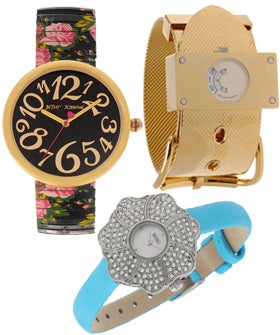
For example, which watch would you choose to wear around?

Honestly, I would choose a Michael Kors watch for many reasons over the watches on the left. (I actually already own one:)). One reason is because it is a well known brand, and I can feel comfortable that if anything goes wrong with my watch, I can always go to a local store. Another reason is because Michael Kors is in fashion and makes a statement that I can afford a little luxury in life. Personally, I bought myself a Michael Kors watch because I worked hard for my money and wanted to reward myself. The brand name itself lured me in the store and it's design consistency sold it.

Thursday, January 31, 2013

Dietmar Dahmen

Use-vertising, pro-sumer and con-sumer. Unfamiliar terms before our guest speaker introduced these ideas and their correlation to advertising. Normally, I associate guest speakers with a lecture day that I can miss. Dietmar Dahmen gave me an entirely new impression on guest speakers. Not only was he energetic, but also very informative, interactive and entertaining.

I was already familiar with the terms nowism and firstism, but never heard of use-vertising or the differences between a pro-sumer and a con-sumer. I never really thought user responses on youtube or comments could have such a big impact on a product's sale number. After his presentation, I began to reflect and realized that it's true! I like trying new places, but I do check yelp first to see the ratings and ultimately base my decision on their ratings. I also liked how he separated the differences between pro-sumers, who show similarities in their advertising, and con-sumers, who highlight the differences.

Not only did he captivate my attention from the very beginning, but he also finished strong. I really liked how he finished his presentation with the a variety of phrases to remember for advertising. My favorite one was "bring the idea you think we can't sell... the one that seems impossible."

Friday, January 25, 2013

The Paradoxical Significance of Advertising

Whenever advertising is mentioned, the first thought that typically pops up is it is a result of a manufacturer's ambition to sell his product or ideals. We are constantly surrounded by some type of advertisement. Whether on a bus, watching our favorite shows, trying to update our Facebook status or driving in a car, we will see at least one billboard, commercial or poster. The reason I believe advertising is a paradox is because ads are generally created to help people sell their products, but in the process harm their competitors. I find advertising intriguing as it is important to society in a variety of ways. The simple act of buying a particular product can set the standards of an item, effect the economy, raise awareness or even start a cause. Due to this, I find advertising and all its works interesting and am excited to know more about it. The sections I'm particularly excited for this semester are the sections based on the correlation between politics and advertising as well as with broadcasting.